Out in the World |  Cities |  Laos |  People |  China Portraits

Monday, January 09, 2006

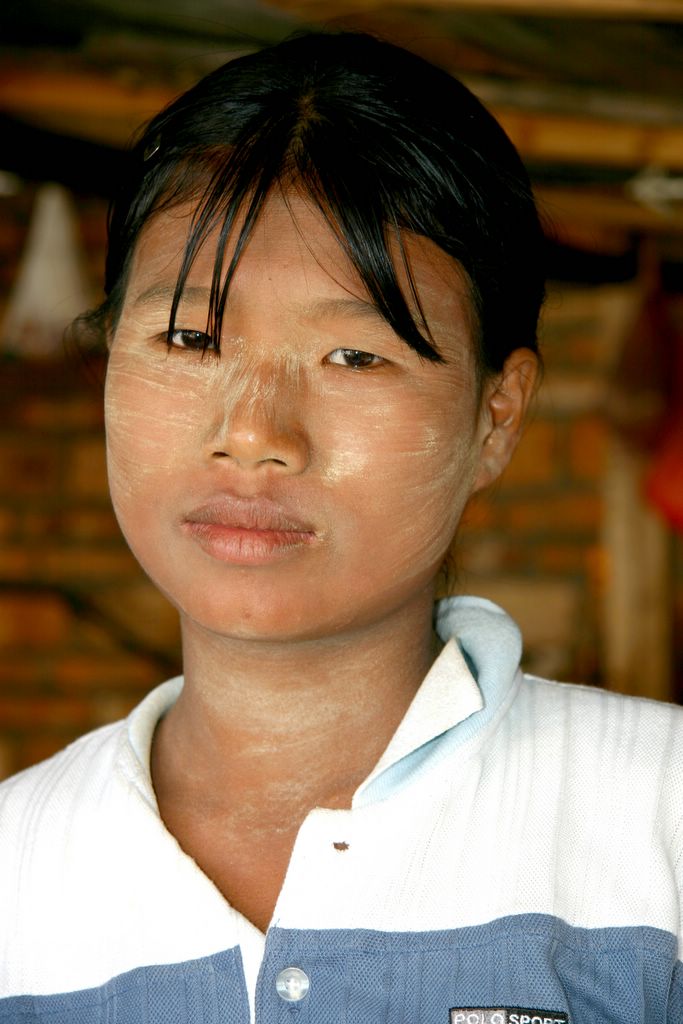
I took this picture in Ruili, the launching point of a trip from China into Myanmar. The girl in the picture is Burmese (in the sense that she is from Myanmar), and she was the first I saw with the yellow paint on her face. This is called Thanakha and is used as a beauty product, as a cleanser, and as sunscreen. Much of the time women and children just smear this on their arms and faces. Sometimes, however, there is much more thought put into the application, and to a wonderful effect.  Posted by Picasa
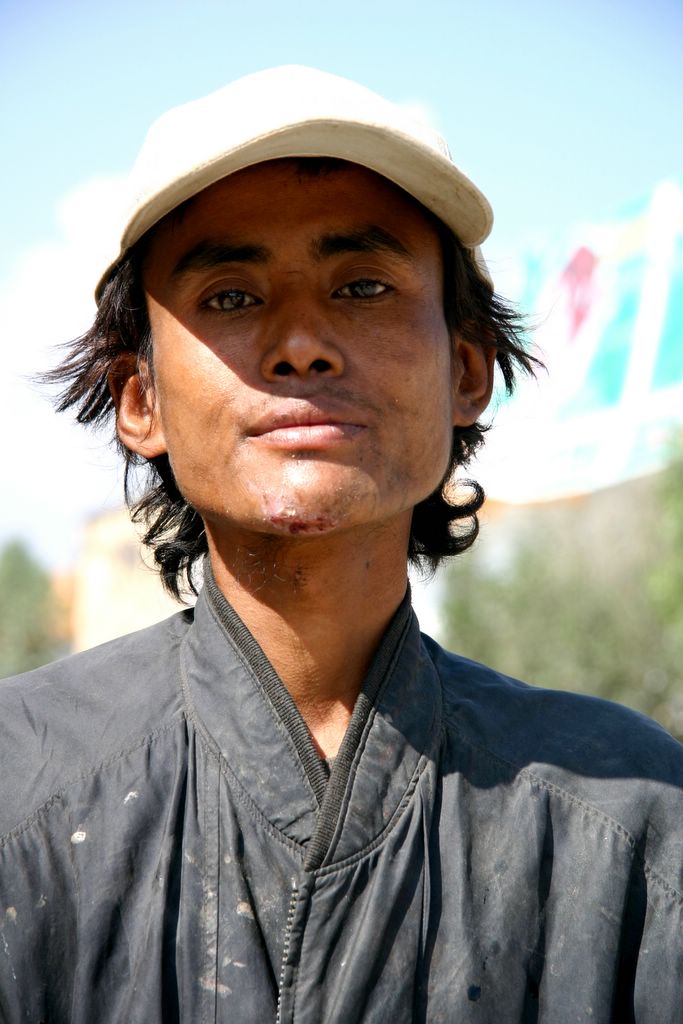
This guy had almost no meat on his bones, and a number of scabs on his legs and face. He was filthy as well, and I could think only this: heroin, AIDS. I saw a few wrecks of people in Ruili. Posted by Picasa
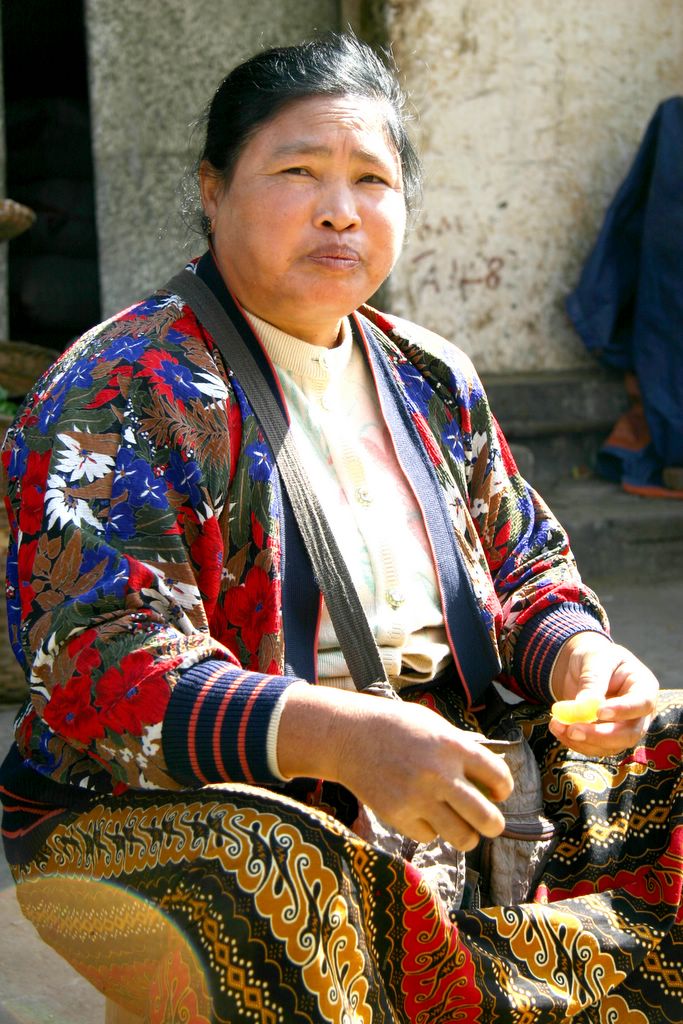
Two Burmese women in Ruili. I could not shake the feeling that the younger one is a ringer for Hillary Swank. Posted by Picasa
This girl was working at a restaurant. There was something about her eyes and her bearing that made it hard to look away from her. She never said a word. Posted by Picasa
Big momma! She had a gigantic laugh, though you might not guess it from this picture. Posted by Picasa
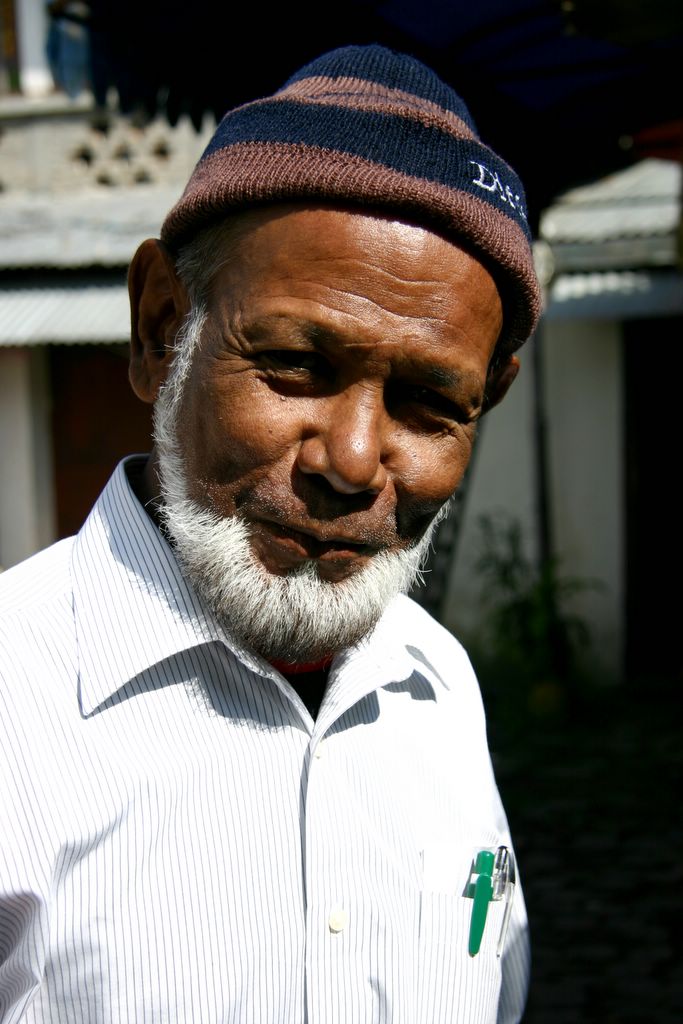
Ooh...this guy was tricky. He came up to me on the street - a street full of Burmese run restaurants, and invited me to eat with him and talk about teaching (he is an English teacher). He introduced me to some of his students and spoke a little (very little) about his government. More he talked about Islam. Then he took me to a jade shop run by his nephew and kept saying he wanted to give me a gift, pick out a bracelet and maybe some earrings for my girlfriend. I kept telling him I had no money to buy anything because I had already sold all my RMB for Kyat. He did not seem to understand that. "I do not want to make a profit," he said. "This was is very nice don't you think." After a half hour of this is the shop I took out the 100RMB I had left and said "This is what I have and I need it for my hotel and food. I can't buy anything." After that he had to go in a hurry, and my first long encounter with a Burmese man was not what I might have wanted it to be. Posted by Picasa
The first picture I took in Myanmar, on the road from Ruili to Lashio. This was outside the restaurant I ate lunch in, one of a few women and girls selling fruits. Posted by Picasa
A young boy nibbling his lunch, just around the corner from the restaurant. Posted by Picasa
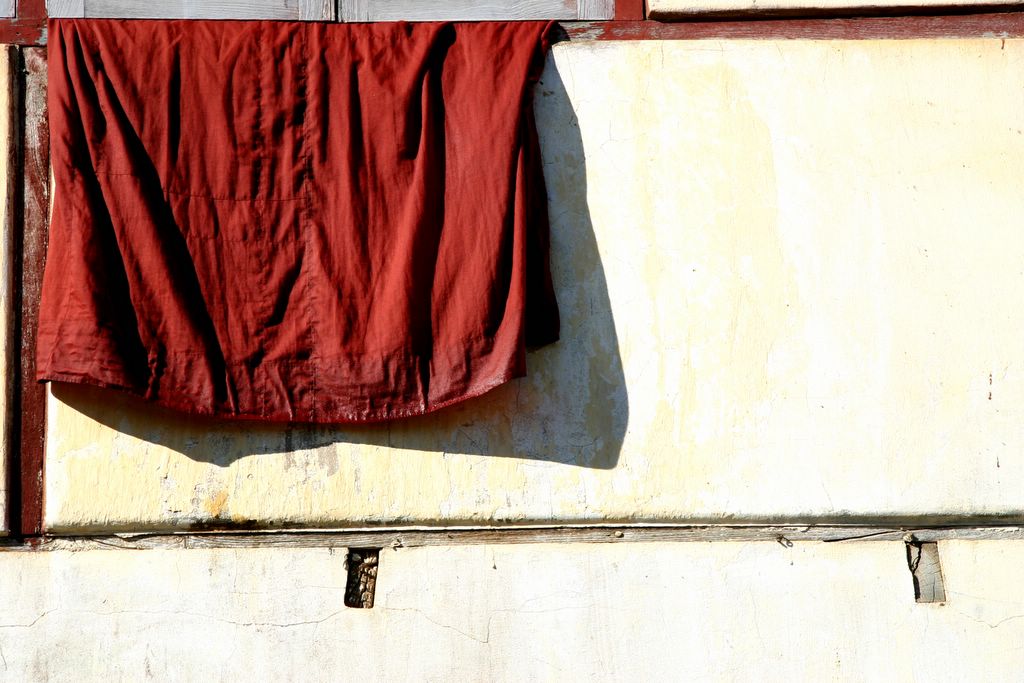
A monk's robe hanging to dry. Posted by Picasa
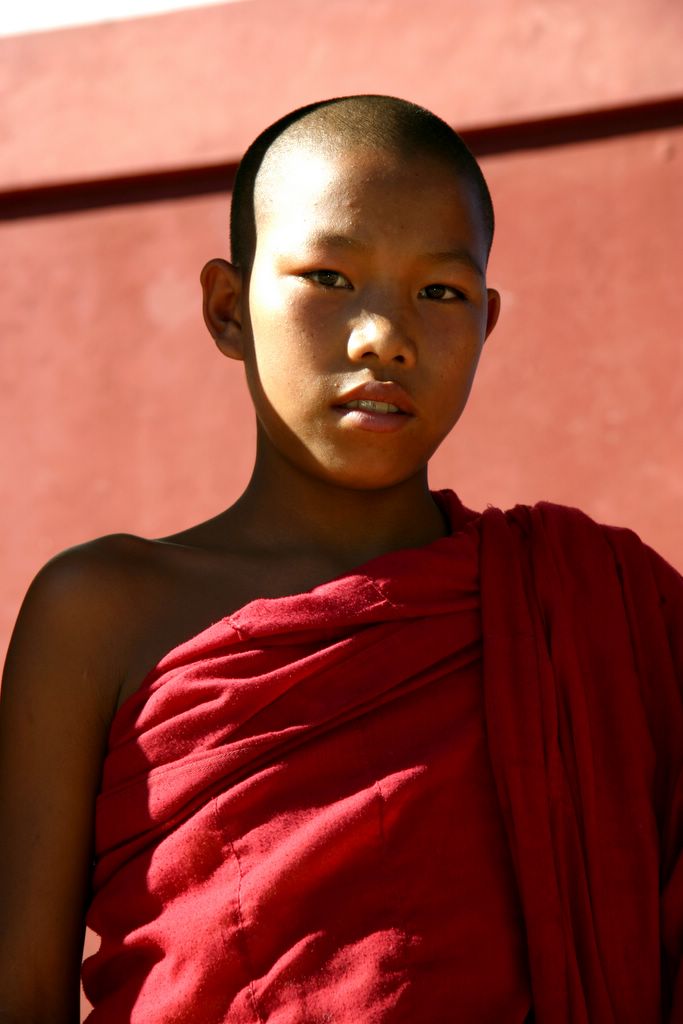
The first portrait taken in Myanmar. Posted by Picasa
Stuck in school. Posted by Picasa
Young monks on a swing.  Posted by Picasa
A monk passing on the sidewalk...there were two of them. They were the first I had seen in Myanmar and I was interested to see that they were wearing red robes, as opposed to the orange worn in Laos. Posted by Picasa
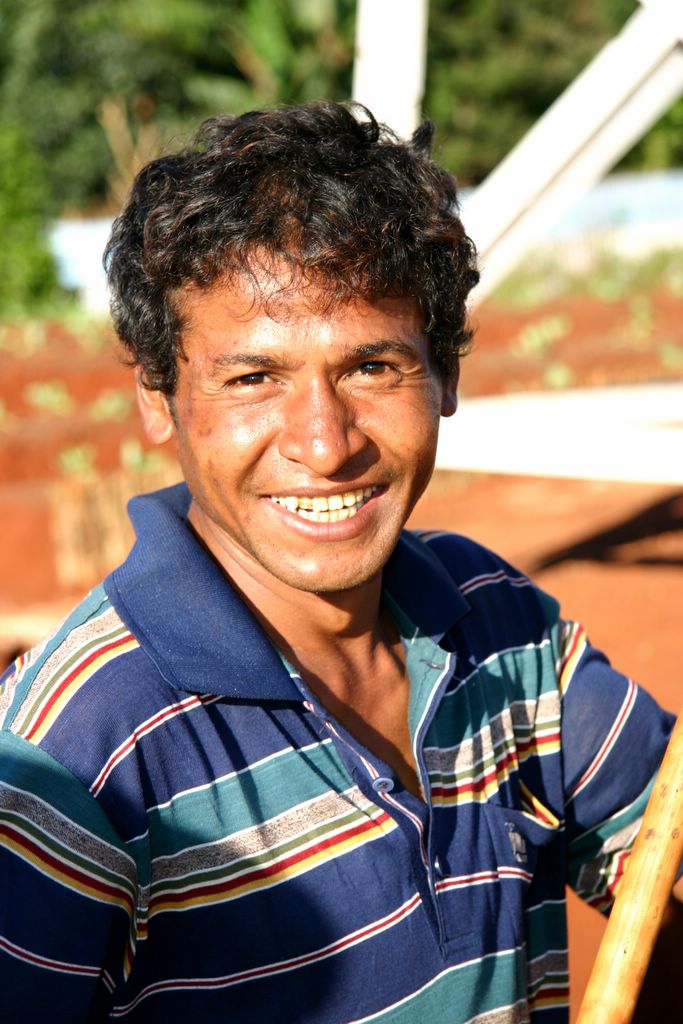
A farmer at work. Posted by Picasa
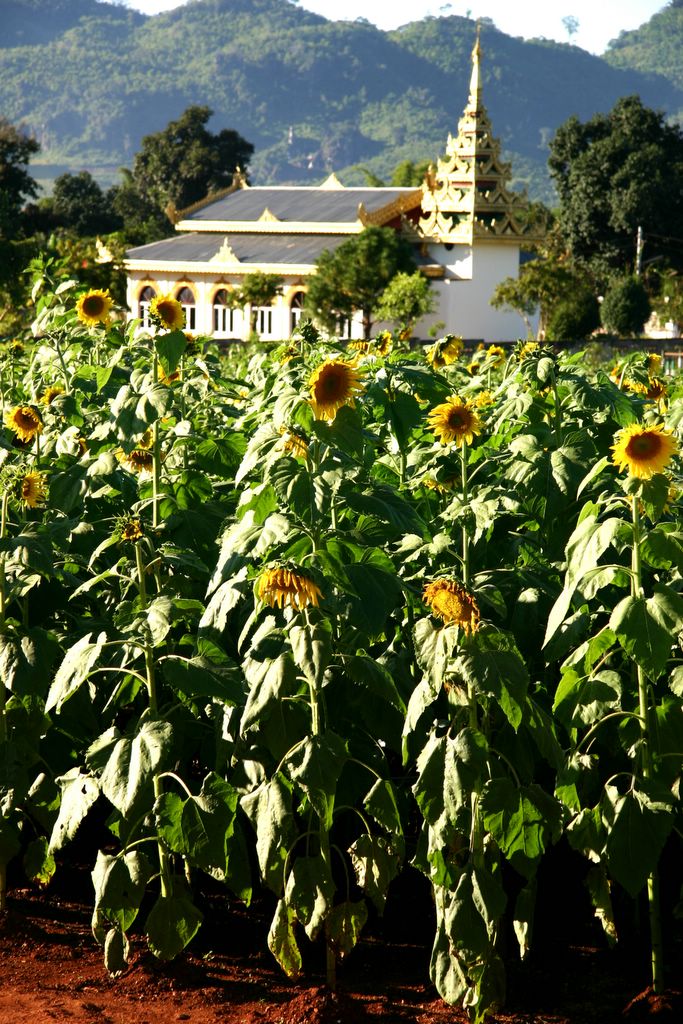
One of the first pagodas that I saw in Myanmar..the first of thousands. Posted by Picasa
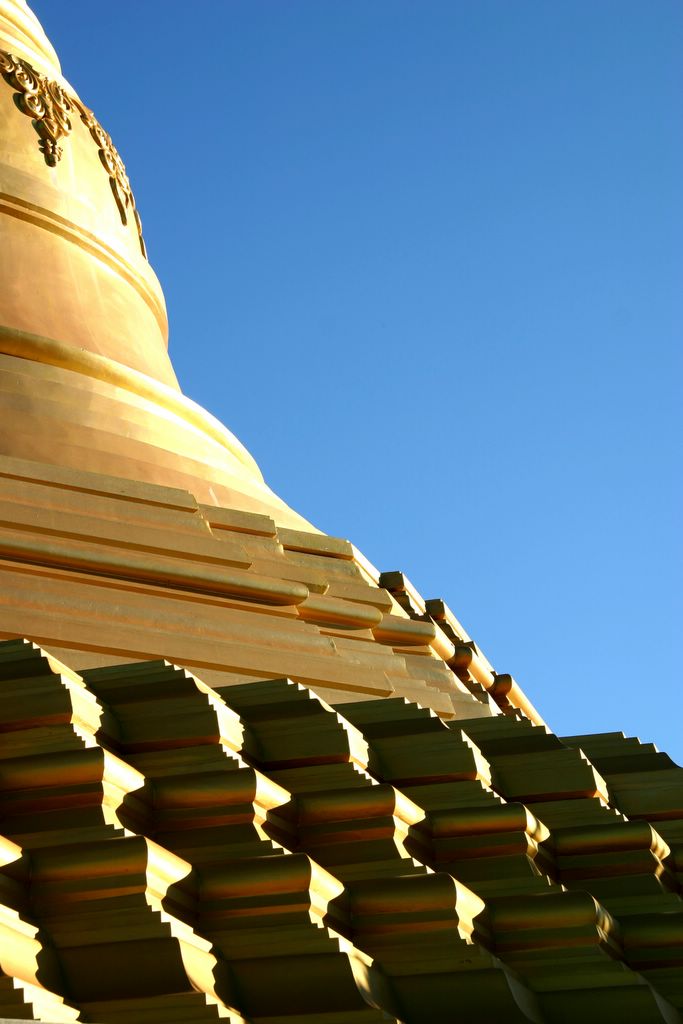
The first pagoda I visited in Myanmar. Posted by Picasa
A closer view of the pagoda. Posted by Picasa
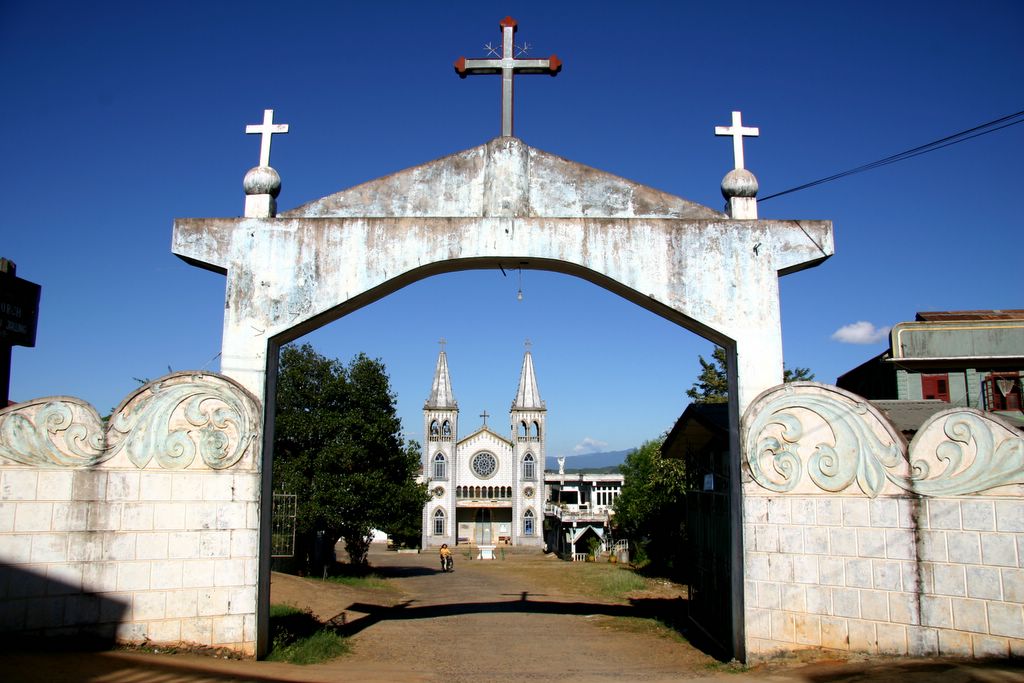
Besides pagodas, there are a lot of Catholic and Presbyterian churches in Myanmar...I was surprised by the number. Posted by Picasa
There plenty of mosques as well. Posted by Picasa
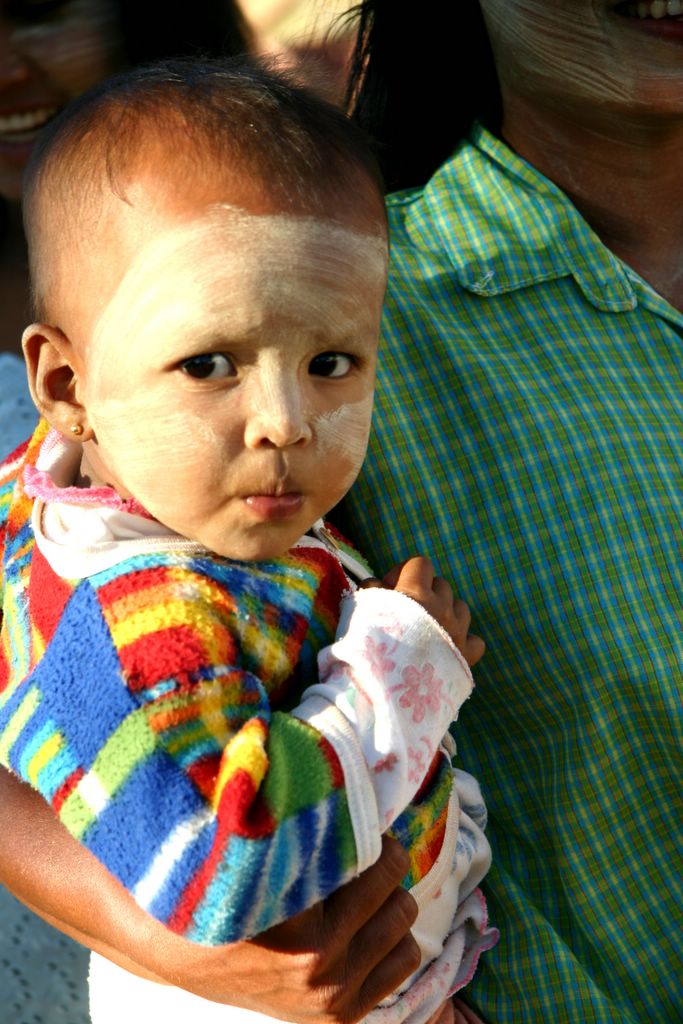
Cute baby. Posted by Picasa
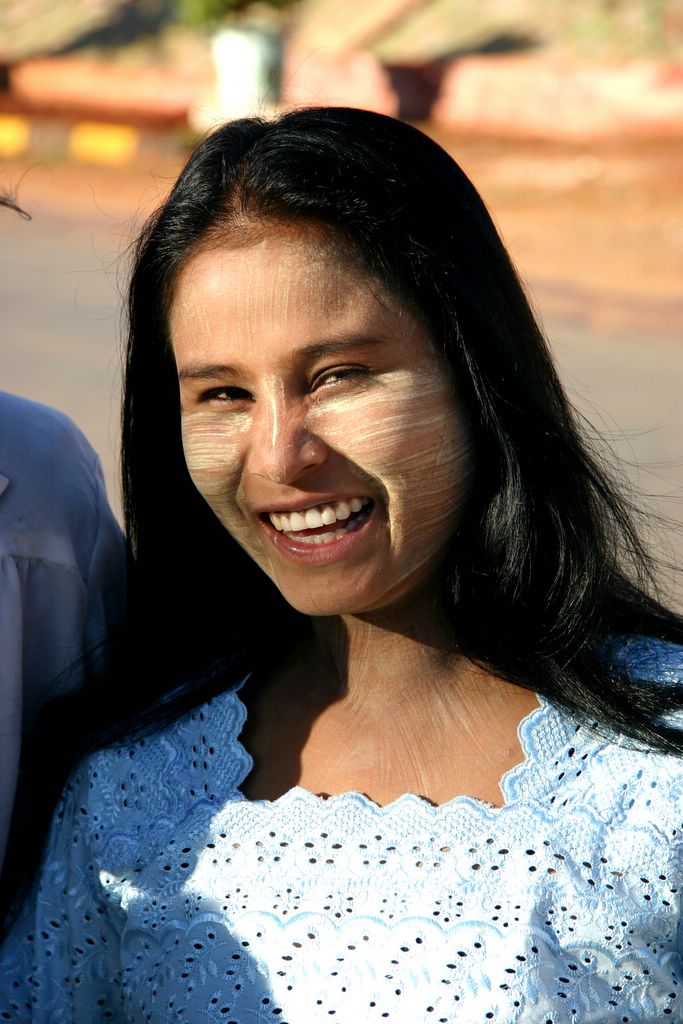
This woman was with the mother of the baby in the previous picture. This was one of the few instances, in either China and Myanmar, where women came to me and asked me to take their pictures.  Posted by Picasa
This woman was very elegant, as many of the women in Burma are. Posted by Picasa
The pink shirt contrasted so much with this child's skin that she appeared even darker than she really was. Posted by Picasa
I had read that there was a lot of diversity in Myanmar, but I was still surprised, especially when I walked around Lashio's "downtown" area in the late afternoon...it seemed northern Myanmar was more mixed than the south, especially in Lashio, Hsipaw, and Pyin U Lin. Posted by Picasa
May I help you? Posted by Picasa
Love the hair. Posted by Picasa
Indian man. Posted by Picasa
After my long walk, I took one last picture, this looking out over Lashio from my $8 a night hotel room. Posted by Picasa
This boy was vere persistent in getting me to take his picture! Posted by Picasa
I should have been closer to take this picture. Posted by Picasa
In China it was sometimes difficult to find coffee. In Myanmar it was never a problem (finding good coffee, though, is another story...) Posted by Picasa
As I was walking to breakfast I saw this woman and asked if I could take her picture. She said, "Yes! Please wait, though!" And then she adjusted her head scarf, came outside and offered a big smile. Posted by Picasa
This girl was watching over me while I ate noodles for breakfast. Posted by Picasa
This guy was sitting on a chair on the sidewalk, his lips stained red with betel-nut. Posted by Picasa
This Chinese man was sitting with the man in the previous picture. Posted by Picasa
There are a lot of ethnic groups in Myanmar. It was nice to see, especially in Lashio, the interactions between them. Posted by Picasa
You want to take my picture? Get out! Posted by Picasa
Before I took a bus to Hsipaw, I spent an hour or so walking through Lashio's market. The following portraits were taken there. Posted by Picasa
The outfit this woman is wearing reminded me of one of the ethnic minorties I encountered in China. Her clothes were filthy and she seemed a little bit lost, like perhaps she was a bit mentally decapacitated. Posted by Picasa
What is she thinking about? Posted by Picasa
A jovial young woman selling fish. Posted by Picasa
This girl just jumped out at me. It was not often in Myanmar or China to see someone with teeth as even and as white as these. Posted by Picasa
I took one picture and was joking around with some people. As I said good-bye and turned to walk away I almost ran into this man. He was bent over and carrying a big woven basket full of vegetables on his back. Posted by Picasa
This woman had been encouraging another girl to let me take her picture. When I pointed the camera at her she just laughed. Posted by Picasa
Happy woman. Posted by Picasa
About the time I took this picture, I realized my water bottle had been leaking onto my pants, making it seem as if I had been unable to control my bladder. A bit embarrassing, but thankfully nobody laughed at me too much. I had to hurry back to my room and change my shorts, and then get a cab to the bus station. From there I took a bus to Hsipaw. Posted by Picasa
The drive from Lashio to Hsipaw was going well. And then it wasn't. We pulled over to the side of the road and there we sat for hours and hours. At one point a large convoy of military men sped by in a variety of nice cars (often jeeps with soldiers holding machine guns standing up in the back, their faces masked). I thought this was why we were stopped. As it turned out it was because a bridge leading over a river was injured and in the process of being repaired. After waiting for four hours I decided to walk across...otherwise I would have been spending the night on the bus. Nothing like walking across a plank of wood twenty or thirty feet above a river with a big backpack weighing you down.For what it's worth, Hsipaw was probably my favorite place in Myanmar...slow-paced and friendly.  Posted by Picasa
Most of the people on my bus decided to pass the time sitting in the shade of trees lining the road. In other buses, people stayed inside - and I don't know how. Incidentally, later in the trip, on a bus from Pyay towards Ngapali Beach, I rode in a bus that was crowded like this, the burlap bags being full of onions and the Burmese being loathe to open the windows (they thought it was too cold). That was part one of a bus journey that goes down in the top three of worst journeys in my travel career. Posted by Picasa
At least while I waited I was able to enjoy a bit of nice scenery. Posted by Picasa
As it turned out, Hsipaw was just across the river. This means that I spent about 4 hours before making the decision to start walking. I only found one guy who could speak English (none could speak Chinese) and he told me it would probably take an hour to walk to Hsipaw from where our bus was waiting. In reality it took about 15 - and (and for part of that I joined three women in hitching a ride with a tractor to take me to the guesthouse.. Posted by Picasa
Both days I was in Hsipaw, I passed the last moments of daylight sipping tasty cappuccinos at "The Black House," a just-opened (one day old the first time I visited) owned by an Australian ex-pat. The house's deck looks out over the river. Posted by Picasa
It grew dark early in Myanmar, by about 4 the daylight was fading. The streets were pretty busy around dusk...in most places there were no functional street lights so once it was dark, it was very dark. I think I saw a well-defined Milky Way in at four different places across Myanmar. Posted by Picasa
This was the first time I saw an ox-cart. I would see many more around the country, even on the beach. Posted by Picasa
The driver of the ox-cart.. Posted by Picasa

Saturday, January 07, 2006

For some reason this boy reminds me of an American actor, but I can't think for the life of me who. Posted by Picasa
Just about all the graves in this cemetery were for Chinese people. The cemetery was about a ten minute bike ride from my guesthouse, and is the starting point for a hike that leads to a pretty impressive waterfall. Posted by Picasa
To get to the falls is not easy. It is recommended that you ask one of the young monks at the monastery next to the cemetery to lead the way. It took maybe 45 minutes to get there. My guide could not speak a word of English but he liked to laugh with me at my clumsiness when I almost fell a few times.  Posted by Picasa
While we were walking it was still quite foggy. It did not clear up until just before we reached the falls. Along the way we passed a few forgotten structures. Posted by Picasa
The path to the waterfall was not always easy. At times we walked through knee deep water. At other times we had to cross bamboo bridges that were two planks wide and bent almost to the water with each step (a real balancing act, and my feet were too big so I almost fell into the water). Other times, like this, nature threatened to swallow the path. Posted by Picasa
Up close to the falls. This is only the bottom part of it...the water must have been falling at least 35 meters. The water at the base was clear blue and cool. I was tempted to strip down to my boxers and go for a dip but then I decided not to. There was a pretty nice little current as the water kept running down another little drop. Posted by Picasa
On the way to the waterfall we only passed one farmer. Posted by Picasa
My first glimpse of the waterfall. Posted by Picasa
While I wonder around and take pictures, my guide rests on a rock and takes in the falls. Posted by Picasa
After taking a picture of the monk watching the falls I waited until he turned around and asked if I could take one with him looking at me.  Posted by Picasa
I saw this on the way back from the waterfall. Wasn't sure if it was abandoned, if it was just a place to escape the sun, or if maybe someone lived there.  Posted by Picasa
On the way back from the waterfall. Posted by Picasa
I was on my way to visit the Shan Palace, one of the few actual sights in Hsipaw. It is closed now though because Mr. Donald, who had lived there, was arrested for unlicensed hosting of tourists and now has a thirteen year jail term. Good old Myanmar. Posted by Picasa
As I was riding my bike over this rough dirt path towards some Shan villages and the river, I stopped to watch these two kids have some innocent fun. Posted by Picasa
This was one type of house found in the Shan villages near Hsipaw. Posted by Picasa
As I was coming back from the river and a small village, I stopped to hop over a small creek and stumble into the fields to try to take some pictures of these women. They were a lot of fun. One of them could speak just a tiny bit of English and she was even a little flirtatious.  Posted by Picasa
Similar to a few photos I took in China. Posted by Picasa
Late in the afternoon, after I had biked through some villages Shan villages, and after I had stopped to chat with the women in the previous pictures, I snapped one last photo of a field worker. Posted by Picasa
Burmese writing on a fading stone wall. Posted by Picasa
There was not much to do at night in Hsipaw. Things were pretty quiet by 8 or 9 - the main thing for guys seemed to be to watch EPL and do some betting. This is a peek into one of the shops in town, around 7:30 PM. Posted by Picasa
The train from Hsipaw to Mandalay. Foreigners pay $4. Must pay in US currency. Highlights of the ride: Women carrying baskets of food from stop to stop, to be sold on the train or while waiting for the next load of passengers and salespeople to board. The women would never stay on for more than one stop and they were always chatting with each other and laughing. Also, putting a little boy up onto my lap so he could see out the window. He was standing barefoot on my thighs. His feet were filthy because his sandals were falling apart. His mother looked withered and beaten down, her teeth falling out and black. At first she was angry at the boy for bugging me, then she sighed when I smiled and said it was OK. Meanwhile a Finnish woman took a picture of us and now I wonder if it is out on the internet somewhere. Posted by Picasa
I can't remember what this boy was smiling at. Posted by Picasa
The inside of the train. Wooden benches, very uncomfortable. The train never went faster than 15 MPH, I think. Much of the time I sat on the door step (which was open) or with my head out the window. Posted by Picasa
This baby was sitting near me from Hsipaw until the first stop. Very well-behaved and curious. Posted by Picasa
This is the baby's mother. I am guessing she was not older than 17.  Posted by Picasa
I took this at the first stop. This girl was maybe eleven and had the short haircut that most of the younger girls in Myanmar seemed to have. She was sitting in the bench across from me for the first half of the trip. Posted by Picasa
Leaning against the train.  Posted by Picasa
Trying to sell some oranges at the first stop. Posted by Picasa
Peeking out at one of the stops. Posted by Picasa
The last car of the train was stacked high with these burlap bags. In fact, the bathroom in our car was impossible to access for several stops thanks to all these bags. I did not envy the guys in charge of loading and unloading.  Posted by Picasa
One of the guys doing the hard work of loading and unloading the train. Posted by Picasa
Another stop, another crew of salespeople. I should note that all train tracks I saw in Myanmar were pretty much hidden by grass. Also, at one point, we passed trees and flowers that grew so close to the tracks that you had to keep your head and hands inside the window. Sometimes the branches even came into the windows. It was a nice game to try to pull the flowers from the trees, though.  Posted by Picasa
This girl's expression crushed me. I wish there was not so much light coming onto her face. Posted by Picasa
At one stop I got out and spoke with a man in the next car down. We joked a lot and laughed, and even though these women did not understand what we were talking about, they were laughing right along with us. Posted by Picasa
This is the reason most people want to ride the train between Mandalay and Hsipaw - this old bridge. It is the highest rail bridge in Southeast Asia, or some such thing. This is about the only place you can photograph the bridge from. Soon thereafter, guards start watching foreigners to make sure they do not take pictures (a national security issue it would seem). Posted by Picasa
At each stop kids from the closest homes would come out and see who was on the train, or they would try to sell things. Posted by Picasa
I know this came after the bridge...the scenery was not stunning during the train ride but it was hypnotic. Instead of being blown away by any one sight, I just felt at peace the whole ride. Posted by Picasa
Welcome to Pyin U Lin, a mountain station town that was once home to many British ex-pats. It is cool here, and very laid back. If you take the train from Hsipaw you should arrive in late afternoon. After taking a horse taxi (see later picture), you should have time for a nice little evening stroll before the sun goes down (this of course, only if your train is actually on time). I would then advise staying one more full day and then taking a morning pick up down to Mandalay (if you are going north to south). This building serves as a landmark in the middle of town. Posted by Picasa
While most of the shops and restaurants are around Main Street in the center of town, the nicest thing to doin Pyin U Lin is to walk or bike around the neighborhoods which are dotted by these beautiful mansions (of course, it is easy to feel disgusted when one thinks about who probably owns these places now). Posted by Picasa
I liked this building a lot as well, right on Main Street. Posted by Picasa
This truck makes me think of bank robberies in Wild West America. In reality it was a bus. Posted by Picasa
For some reason I really like this building. This on is on Main St. as well. Posted by Picasa
One of the buildings off of the main part of Main Street in the center of Pyin U Lin. Near the center of town, along maybe a kilometer long stretch of road are an abundance of restaurants, some markets, clothing shops, and even, much to my surprise, an internet ready computer that could even access Yahoo hidden in the back of a store (there is a small sign out on Main Street pointing the way). Posted by Picasa
While many of the buildings were quite lovely, the roofs just as often left something to be desired. But then again, practicality is the most important thing. Posted by Picasa
One of several churches I saw around Pyin U Lin. This was the nicest of them. A man opened the church up so I could go in and there were notices about different improvement projects being funded by British parishes. Posted by Picasa
Inside the church - beautiful in its simplicity, and evocative of a previous time with its wooden floors and low wooden pews. Posted by Picasa
There are a lot of satellite dishes in use in Myanmar. Posted by Picasa
I often wondered if the insides of these buildings could in any way match the grandiosity of the exteriors. Maybe once a long time ago... Posted by Picasa
Perhaps what Pyin U Lin is most well known for - these Wells Fargo-esque horse drawn taxis. It should be noted that most of the horses were in awful shape, and to get from the train station to my guesthouse took more than a half hour. Posted by Picasa
In most places I visited in Myanmar, I would see female Buddhists out in the afternoon going from house to house or business to business collecting food items or money donations.  Posted by Picasa
Two guys sitting, doing nothing.Nothing to do. Posted by Picasa
A close up of the guy in the background. Posted by Picasa
I saw this boy a few times. He had a very high pitched voice and liked to sing. I am still curious as to his ethnic stock. Posted by Picasa
This woman had some sort of health problem - she shook constantly. It was not easy to take a picture of her, but she was very happy when I asked her if I could. Posted by Picasa
The mother of this baby was very happy when I took this picture. A few minutes later I ran into them again up on the Main Street and she asked me to show to photo to one of her friends. Posted by Picasa
Man with his dog, and lots of grain. Posted by Picasa
Help, let me out! Posted by Picasa
Talk about a stirking face... Posted by Picasa
One final image from Pyin U Lin. From Pyin U Lin, it is easy to take a pick up down to Mandalay, a ride that takes about two hours and costs maybe $3. The road is even in pretty good shape. Posted by Picasa
Welcome to Mandalay, a hot dusty city that is the second largest in Myanmar. Crowded, polluted, and crumbling, walking the streets is an eye-opener. Unfortunately, it was in Mandalay that my camera started to go bad. From here until the end of this page you will hear me complain about that entirely too much. After the lens stopped working right, though, my visit was never quite the same, which made me realize how much I love photography. You will also see that the quality of the posted pictures goes down a lot from here on out.  Posted by Picasa
Looking down one of Mandalay's long, destitute streets. Posted by Picasa
This was just down the street from the Nylon Hotel, which is where I stayed. Not a bad deal for those of you heading to Myanmar. Posted by Picasa
A lot of skinny, bony, wrinkled people doing a lot of sitting around. Posted by Picasa
In Mandalay, well, in Myanmar, you see a lot of people washing in the streets. I would have like to shoot some of these closer up, but the camera was getting worse at this time. Posted by Picasa
Calendars and posters like this - racy by Myanmar standards come off as quaint and sweet. Posted by Picasa
Buses like this help make Mandalay feel like a crazy hectic urban place that stopped moving forward in 1965. Or earlier. Posted by Picasa
There seemed something sweet and depressing about this scene. Posted by Picasa
One more vehicle to help add to the vibe of a place that is living many years in the past. Of course, this is one pretty sweet ride. Posted by Picasa
At intersections, crowds of bikes and cars, and to a lesser extent motor bikes, would head off.  Posted by Picasa
One more crowded street. This was at a late afternoon market. Posted by Picasa
A boy with a striking face at Mahamuni Pagoda, one of the most famous sights in Mandalay, known for a giant gold-leafed Buddha. This kid was one of several who were sitting around inside, playing with foreigners, hoping for money. Posted by Picasa
Sunset from Mandalay Hll, something just about every visitor to Mandaly experiences. For my money the best view is not from the top, though...this is from about halfway up. Posted by Picasa
A man praying at Mahamuni Pagoda. Posted by Picasa
Before going to Amarapura to see U Bein Bridge and old monasteries and silk makers, we visited several places in southern Mandalay. At one place there were papermakers. At another women weaving tapestries. The most impressive, perhaps, was the makers of gold leaf. The gold had to be pounded down several times, and for a total, when all was said and done, of about 7 hours. The guys doing the pounding, as you can see, were very muscular, and I noticed their hands shook pretty badly when they were resting. Posted by Picasa
Just before lunch we went to a monastery to watch monks line up to get food bowls filled. It took about a half hour for all of them, and we learned that each day, different people volunteer to provide food for the monks. On that particular day I believe some people from Japan had been in charge. I am still trying to figure out how the boy in the background turned out so white. Posted by Picasa
Another maker of gold leaf. Posted by Picasa
After watching the monks get their lunch bowls filled, we chatted with a few of the English speaking monks, and I made faces at two young monks wearing white robes (something I had not seen before)...this was one of them. You wouldn't believe from this picture that he has a brilliant smile and was laughing the whole time I was there. Posted by Picasa
Crossing U Bein Bridge, which is made all from teak and is more than 200 years old. Posted by Picasa
I am sure this girl was pictured countless times, with such a beautiful face and with the leaves painted as they are. She was sitting on U Bein bridge, where many tourists pass by each day. The pictures after this are of women in a small village of thatch huts on the far side of the bridge, a village built near some ancient-looking ruins. Posted by Picasa
I think this is the daughter of the woman in the following picture.  Posted by Picasa
This woman has such a strong face. I wanted to photograph her straight away. I hated not being able to talk to her, or any of the following people. After being able to communicate so well in China, it was frustrating to feel so helpless when trying to exchange thoughts or ideas. Posted by Picasa
When I look at this picture I look hard at her eyes and try to see if I can discern any of the difficulties she must have lived through.. Posted by Picasa
Of all the female monks I saw in Myanmar, she was without doubt the most interesting in terms of facial appearance. I took her picture when we visited Sagaing. Posted by Picasa
These were my favorite moments up at Sagaing, laughing with these workers. They were good fun - my camera only functioned on 5 of the 20 or so shots I tried to take. Posted by Picasa
I couldn't get a grasp on how old this girl was. I have little doubt, though, that she will age much faster than she should.  Posted by Picasa
I wish I could have such great balance. Posted by Picasa
This woman just kept laughing and laughing. Then she offered us ice pops. Posted by Picasa
A man entering a bright pink building. I think there was another guy inside, a drunk guy from the size of his voice. This was not far from where I took the pictures of the people in the previous frames. Posted by Picasa
This was taken a second after the last frame. Posted by Picasa
This was before the last stop of our tour, sitting on boat waiting to cross a river. Once over, three of us rode on a horse drawn cart and visited several old temples as well as a leaning clock tower. Posted by Picasa
This is another of a series similar to the picture you see next.  Posted by Picasa
One final picture from Mandalay - or near Mandalay. This was taken at the end of our daytrip, while we waited for a boat to come across the river and then ferry us back.  Posted by Picasa

Friday, January 06, 2006

From Mandaly I took an overnight bus to Inle Lake. This meant being dropped off at a junction road at about 5 in the morning and then taking a half hour taxi ride to where all the guesthouses are. Inle Lake is maybe the most interesting place in all of Myanmar, a place where people have created villages and lives that function in concert with the water, which comes and goes with the seasons. I am sure there are other places in the world where societies operate like this, but I have not seen any of them. Posted by Picasa
One of the first things I saw at Inle Lake, actually before I saw the lake itself, was this stupa under repair. Posted by Picasa
I thought this was a pretty cool system for drawing water (or that's what I guess it was for anyway).  Posted by Picasa
Even in the town closest to Inle Lake, where all the hotels and guesthouses are, many of the houses are built on water. Still, thanks to the algae, the front yards are nice and green. Just not so great to play football on. Posted by Picasa
Inle Lake sometime seems to be more of a marsh than a lake (and during the dry season, it really is not a lake). The water can seem kind of brackish, which means that the flowers sprouting from the water seem even more vivid than they are. Posted by Picasa
And here a close up of those pink flowers. Posted by Picasa
A common thing to do when visiting Inle is to take a sunset canoe ride. Your boatman will probably make a necklace for you from a flower (by peeling the stem), and then give you a few flowers to put in water for your hotel room. I took this picture of the flowers he gave me as they hung over the water. Posted by Picasa
Here a young girl works underneath her house. As a random aside, I often wondered if the men who live on the lake ever came home drunk, are there fines for boating under the influence. Posted by Picasa
The people's lives are entwined with the Lake...they bath in it, plant crops in it, build their houses in it, make money off tourists who come, and each morning, they come in on their boats bringing things to sell at market. Posted by Picasa
A unique way to fish. Posted by Picasa
Children have a lot of resposibiity from an early age, it seems...you see them rowing boats on their own, doing work. I saw girls as well as boys doing work. Posted by Picasa
In the villages around Inle Lake, and in the surrounding mountain areas as well, people wear different types of cloths on their head to distinguish their village from others. You will see this more in a few pictures. To be honest, I don't know if there was any significane to this towel or not. Posted by Picasa
This guy was probably the biggest man I saw in Myanmar - well, at least in the Lake region. Almost all the men were muscular, but most of them were slim and wiry.  Posted by Picasa
Happy man. Posted by Picasa
I don't know if this guy was wearing the towel to define his tribe or because he wanted to keep the sun off his head. Or maybe he just wanted to look cool. Posted by Picasa
..and here is yellow towel, smoking a cigarette and out of focus woman. She and the following two girls were working at the big market being held in one of the villages on the Lake that day. Posted by Picasa
...and here is orange with black stripes girl. Posted by Picasa
...and here is red and black checked girl. Posted by Picasa
It took a long time for the sun to get out from behind the clouds the morning we went out on the lake (we being myself, three Japanese, and a German guy met that morning)...The light was beautiful coming out from the clouds, though, and down over the mountains...and of course...right, the camera lens. Posted by Picasa
This is an awful picture, but you can kind of see how people row their boats on Inle Lake, more often with their legs than with their arms. Posted by Picasa
Because the sky was so clear (after 10 AM, anyway) and because the water was so calm, the reflections were often direct mirror images of what was above the surface. Posted by Picasa
This was one of my favorite reflections. I don't know why, though, because it is kind of cluttered. Posted by Picasa
The clothes and their reflections really stand out amidst the blue, green, and brown that dominate landscape (water, grass, and homes). Posted by Picasa
More clothes reflected in the water. Posted by Picasa
Here a girl weaves silk,and in the building behind a man looks on - and behind the camera I fume. When touring the lake, you visit a lot of handicraft places, gold-making, silk weaving, papermaking and such. There is also, of course, plenty of chance to buy stuff...in fact I bought a few things for Natalia there. Posted by Picasa
I took this at a stop on our boat tour. I think I was supposed to go somewhere else, but I wondered off on my own and came to this small series of ruins. Here vomited landsllide of dirt. Posted by Picasa
Here, thought you can't see it so well, a tree strangles the ruins of a stone stupa. In a way, some of the ruins one sees on a tour of the lake are more impressive than those at Bagan. Posted by Picasa
Even though there are a lot of little temples and pagodas scattered throughout the villages if the lake, I still got a kick out of them each time we passed one.  Posted by Picasa
The light gets heavy over the lake in the late afternoon. The sunset takes awhile, and when on the lake, passing people boating home and finishing up their work, with the sound of the oars running through the water, it is very easy to fall into a pleasant state of sleepiness. Posted by Picasa
Looking out over the town of Kalaw. Many people do three day treks to or from here (coming from or going to Inle Lake). I took a bus. It was a bit cooler here, maybe mid 20'sC, and there is a lot of potential for nice walks. Also - somewhere up on the main road a group of us ate at a new, as of then unnamed restaurant. I think it was going to be called James' Restaurant or something like that. Anyway, best meal I had in Myanmar. Posted by Picasa
This was kind of cool...a cemetery near the top of a hill. Most of the graves were very recent - within the last 3 or 4 years, some as recent as October. It was interesting to see the Christian first names matched with Burmese last names. The two graves pictured stood out amidst the simple wood and stone crosses that marked the rets of the graves. Posted by Picasa
There are countless walks to make around Kalaw. Most of them will at some point take you past thatched houses where the outhouses are merely wood shacks with holes cut out in the floor. Bathrooms like this are common across Myanmar. If you are tall, be careful not to crack your head. Posted by Picasa
Ack! You would think I took this at night...but no, middle of the day. Just wanted to show some of the large houses that are in the process of crumbling to the ground that surround Kalaw - houses that perhaps once housed well-off Brits. Posted by Picasa
Yes, you are not allowed to wear your feet when you enter this temple at the top of a hill near Kalaw. Actually, there are many temples in Myanmar where it is necessary to do a little radical surgery if you wish to enter. Posted by Picasa
Welcome to the temples of Bagan. There are thousands of these scattered around the area, many of them more than 1,000 years old. It is a big tourist area, and one can even take hot air balloon rides for 200 Euro (I think $250)...to put the cost of this in perspective: I met a guy buying two tickets for guests in his hotel. The guy was 20 years old and spoke English, Chinese, Japanese, and some German, in addition, of course, to Burmese. His monthly income: under $7. Two years of working and not eating and he could almost take that hot air balloon ride.  Posted by Picasa
Some of the temples look quite new, clean and untouched like this one. I often wondered how much restoration work had been done to various buildings. Still, there were some that were totally run down. Those were my favorites, with tall weeds growing up and making it difficult to approach the building, and then those little spiky burrs that stick to your clothes and shoes and legs. Of course, all the pictures I tried to take of those were hopelessly blurred, so I can't show anyone what they look like. Sorry. Posted by Picasa
One thing about being in Bagan in December...the skies were blue blue everyday, and the temperatures were hot but comfortable. Perfect for a bike ride or a long long walk. Posted by Picasa
For some reason I think the yellow-white temples are more attractive than those made from red brick or stone. I think they betray their age better, stained and weathered as they are. Posted by Picasa
I don't know which temple this is, but it is one of the biggest. Posted by Picasa
The figures on the buildings at Bagan are not as impressive as those at Angkor, but that does not mean they don't exist. Posted by Picasa
With people selling paintings and shirts and Buddhist kitsch items at just about every temple, it is easy to forget sometimes that many of the temples are still active...a fact brought home by the occasional parade of monks seen strolling around. Posted by Picasa
I think it would have been fun to try to shoot some portraits at Bagan. Here a little boy is sitting with his mom early in the morning, just after they have set up shop for the morning. They were selling stuff in the corridor leading up to one of the main temples. Posted by Picasa
Sure there were kids, and and monks, and hawkers aplenty. Still, the coolest people I saw were these women, smoking these fat fatties. I was pleasantly surprised that the picture came out even relatively in focus. I was seriously pissed at the time that I wouldn't be able to take something from close up. I need to stop dwelling on this. Posted by Picasa
For some reason this guy kind of creeped me out. Up close it seemed like he had some sort of black eye-liner on, and with his quiet pose, he gave me the impression of being some sort of killer meditating before a strike. OK...so my imagination was going a bit off that day. I really wish that my camera was working better then, so I could have taken a shot from closer up...the background colors were perfect for a portrait, as was his face.  Posted by Picasa
Another view of the creepy looking man. I wonder what was in the white plastic bag. Posted by Picasa
One other nice feature at Bagan are the massive trees that surround some of the temples. The white spot on the right side is thanks to that awful lens. Posted by Picasa
Late afternoon (and out of focus). Posted by Picasa
Near sunset, horsecarts run tourists to the most popular temples to view the end of the day from. I found a smaller place, one where there were no hawkers, and where you were still allowed to climb up to the top. About a half hour after I got there, two hawkers saw me and climbed up to chat and try to sell me paintings. I said no. Then one of the most poignant moments of the trip. One of them asked me "Why doesn't anyone buy our things? I sold nothing today." "Because at every single temple there are at least twenty people selling pretty much the same thing," I said. "And people don't like to be bothered too much when they just want to see sights." I pretty much felt ashamed of my life when they left...at my luck and at my relative prosperity. And now when I say, I realize how horribly condescending and faux-concernced it sounds. Being faced with poverty is enough to make you want to curl up in your house and pretend the rest of the world does not exist.  Posted by Picasa
Mt. Poppa is a daytrip from Bagan. There is a stupa perched on a the top of a not-very-high hill, and there are a lot of monkeys running around the steps leading up to the top. Here one disappears in the junction between two rooftops. Posted by Picasa
Up on top of Mt. Poppa...the views out were not all that great, and considering that it took more than four hours to get there and back, I would say not all that worthwhile - moreso because the rise in transportation costs brought on by the rise in oil prices, and because oil is no longer subsidized by the government. Posted by Picasa
This is looking down from Mt. Poppa, down towards the corrugated metal rooftops that cover the houses and restaurants in the small town at the base of the not that worthwhile to visit tourist site. Posted by Picasa

Thursday, January 05, 2006

Welcome to Ngapali Beach. Can you see the man in the speedo? There were several of them there. There was also a wooden building that served as a school right next to the beach, just past a $500 a night resort. These kids were on their way home from school. The beach is about a mile long, and the sand is white and soft (although there are a lot of sharp shells late in the afternoon, right when the football games begin). If you are thinking of visiting the beach, my advice: Fly! I thought I could handle any bus ride after some of my 20 plus hour marathons in China. I was wrong. By the way, the days prior to this, there was not a cloud in the sky. Posted by Picasa
Again, it is a shame the one day I went out to take pictures was the day the sun went away. At least you can get an idea of the water. I should add the water was also very warm, and most of the time the waves were much higher than I thought they would be. Posted by Picasa
At this point I had to give up on photography at the beach. I am only putting this up to give an idea of life in the fishing village at the far end of the beach. There were thousands of fish spread out to dry on these blue nets, and many women collecting them. You can see in the background the thatch huts they lived in as well as the giant palms that line the entire mile long beach. The smell here was awful. I should also note that it was close to hear that I was surrounded by several of the many ragged dogs that roam free on the beach, almost causing me to wet myself and have a heart attack. Thankfully they did not attack me, but it took every bit of self control I possess not to panic and perhaps cause them to devour me - they sure as heck could have used the meal!  Posted by Picasa
Late in the afternoon, one would walk past a few women, maybe some almost naked children, collecting shells that had been washed in by the tide. The women were very bony, and looked much older than they must have been. After walking into one of the several hundred dollar a night resorts that line the beach right about where she was, the contrast between the life of a fisherman and the foreigners who come to the beach for rest and relaxation was just about too much to bear. Posted by Picasa
A few minutes after walking past the last woman, this guy flew by...a sight I never really expected to see.  Posted by Picasa
This girl was very pretty, and very shy. I tried to take a few portraits of her, but could not see her well enough through the bad lens to focus it. I was lucky to get this almost crisp. Posted by Picasa
At sunset, there were many boats out on the water, bringing fishermen and workers back to their village. I was usually down the beach a way, playing football (soccer) with a bunch of locals who were quick, all muscle and bone, betraying a life of hard physical work. Posted by Picasa
One last sunset picture to remember the beach by. From the beach, I then flew to Yangon...I wasn't about to take the bus again. Posted by Picasa
This is a picture looking towards Sule Pagoda. In the afternoon and evening, Yangon's streets and sidewalks are packed with people and cars and life. By 11, they are pretty much empty. When I think about Yangon, I get angry again that my camera lens was so screwed up - that is why most of these pictures seem dark or are out of focus, also why there are no more people pictures - they were impossible to compose. Posted by Picasa
One must not spend too much time looking up at the buildings in Yangon, or at the people sitting around or passing by. The sidewalks are a hazard. Posted by Picasa
Besides all the junk on the sidewalks, and besides the betel nut juice and the potholes, one must also watch out for animals. Posted by Picasa
Fresh betelnut spit. Posted by Picasa
A dragon looking up at a stupa at a temple near the Yangon River. Posted by Picasa
The Sule Pagoda in central Yangon. Posted by Picasa
Yangon is full of colonial period building, most of which are decrepit. There are black stains and a general sense of crumbling about them. At least the pastel colors add a bit of flavor to some of the streets. Posted by Picasa
There are a few modern buildings amidst the crumbling colonial buildings. However, even those buildings reveal the poverty of the country, standing unfinished. Posted by Picasa

Wednesday, January 04, 2006

This was perhaps the ugliest of the many ugly buildings in Yangon... Posted by Picasa
Some of the buildings are easier to imagine in an earlier state of glamor that others. Posted by Picasa
This was one of the most attractive buildings in Yangon, right near the Sule Pagoda in the middle of the city. Posted by Picasa
In Myanmar, the pagodas and churches are usually the most graceful, best-kept buildings. I forget what church this is but I do remember the almost skeletal Indian woman working in the Church. She was sweeping the floors and she kept begging while I was praying. I entered the church in search of a respite from the heat, and in need of quiet and refuge. Instead I was confronted with the helplessness that I was trying to escape - the helplessness that anyone with a conscious feels when visiting Myanmar. Posted by Picasa
There is a lot of stuff for sale in Myanmar. Amongst my favorites - these circa 1980 electronics. There weren't a lot of buyers for things though - I suspect that even these kind of products were somewhat luxurious for a good portion of the population. Posted by Picasa
Whether people are working or not does not seem to matter most of the time. There isn't a lot of making money going around...just sitting and waiting, sitting and waiting. This was near the Yangon River. Posted by Picasa
There were a few other people gathering trash with this woman. I don't know if this was their job or if it was a treasure hunt of sorts. This pile of garbage was a good ten feet long and four feet high, just off to a sidewalk. Even the small open spaces are cluttered. Posted by Picasa
I was surprised, at this crowded intersection in the heart of Yangon that I might be able to take this picture almost without any other people in the frame. There was a long line of traffic waiting at a light, which soon zoomed past, within inches of this monk. Another instance where I cursed the state of my camera. Posted by Picasa
There are a lot of eye-catching vehicles cluttering the streets of Yangon, often spluttering along, on the verge of breakdown. Kind of a reflection of the city, the country as a whole. This pedicab caught my eye my first day in Yangon. Posted by Picasa
I can not imagine riding one of these ancient buses - especially when considering how crowded they are and how hot it is. Still, when passing in front of buildings like these, there is an undeniable charm. Posted by Picasa
Seeing this car, and in front of the pastel-colored building, I thought I might be in Cuba. Then I remembered my country won't let me go there. Posted by Picasa
One last funky old-school vehicle. Posted by Picasa
Where I spent my last night in Myanmar. Not a very exciting picture to finish with. But - try to hear the fans clattering and the traffic outside. Try to feel the 88 degrees. Try to taste the 60 cent drafts of ABC beer, Myanmar's version of Guiness. Try to imagine writing at one of those little plastic tables or watching an EPL game while smoke gathered around you. I imagined being an aged alcoholic expat while I was there. Posted by Picasa